Walk onto almost any type of hectic building website and you will certainly see the usual mix of hard hats, high-vis vests, and machinery. What you do not constantly see is exactly how close that website is to a serious clinical emergency. One wrong action on scaffolding, a gone down grinder, or a heat-stressed pupil on a warm piece can relocate you from routine work to dangerous injury in seconds.
That is where fast first aid and CPR training stops being a box-ticking workout and becomes part of your threat control. When you are encountering a looming customer audit, an occurrence notification, or a regulative due date, you do not just need training. You need the right individuals educated, to the best degree, as rapidly as possible, without shutting down the job.
This write-up considers just how building companies can meet first aid and CPR commitments under limited time stress, without compromising high quality. It makes use of what really occurs on hectic sites: last-minute require a fast first aid course, foremen dragged out of tool kit meetings into first aid and CPR training classes, and safety managers attempting to fix up production targets with lawful duties.
Why construction sites hardly ever have "spare time" for training
On paper, establishing first aid training is straightforward. Reserve a first aid course, placed some people through, get the first aid certificate, upgrade the register. Any individual that has actually functioned around cranes, concrete pumps, and subcontractor routines understands it is not that tidy.
Construction sites are under stress from several angles at once. Programs slip in bad weather, after that management attempts to claw back time. Trick employees manage several duties. A solitary delay with a subcontractor can waterfall across the website. In that setting, drawing numerous employees off the task for a full-day first aid training course can feel near impossible.
I have seen supervisors try to keep up just a solitary marked initial aider on a multi-level job, on the unsteady presumption that "they are generally neighboring." That functions up until your only first aider is the one that obtains hurt, or is embeded a lift with a distribution, or is out at a prestart conference on an additional component of the project.
The truth is blunt. You have 2 non-negotiable restraints:
First, legislative and customer demands that dictate minimum first aid insurance coverage, consisting of both varieties of first aiders and the degree of training they hold.
Second, the straightforward truth that ambulance reaction times can not defeat physics. On some city websites, you might see a rescue in 10 mins. On remote infrastructure work, you may be looking at 30 to 60 mins before professional help arrives. In both cases, the very first 3 to 5 minutes of reaction on website issue more than any siren in the distance.
Fast first aid and express CPR training alternatives exist specifically to work around these constraints without reducing the bar.
What "fast" first aid really means in practice
Fast first aid courses are not around cutting edges. If a company supplies a fast certification that misses core sensible skills, beware. Regulators and good auditors will certainly not accept a lightweight card instead of genuinely examined skills.
When trainers speak about fast first aid training, they typically suggest one or more of the following:
Shortened face-to-face sessions, supported by durable pre-course online learning.
More adaptable scheduling, such as early morning or late afternoon express first aid training, so workers shed less efficient time.
On-site training, so traveling time goes down to practically no and participants train in their real job environment.
Targeted course options, so you match the sort of first aid and CPR course to the particular threats on your site as opposed to taking the longest, widest choice by default.
The secret is compression, not dilution. As an example, a basic first aid and CPR course that utilized to run for a full day could now be supplied as a 3 to 4 hour express first aid course, as long as participants complete a substantial portion of concept in advance. If the on the internet pre-learning is treated seriously, you can get to the course all set to concentrate on hands-on abilities like CPR, bleeding control, fracture administration and sensible scenarios.
I have actually run sessions such as this for construction crews where we began at 6.30 am, completed in the past lunch, and still fulfilled regulatory needs. The website maintained the majority of its day, and the training dovetailed right into the existing prestart culture.
Understanding your lawful and customer obligations
Before you start searching for the local fast first aid course near me, you should be clear concerning what you need to comply with. This varies by territory, yet a couple of patterns correspond across the majority of building environments.
Regulators commonly call for a risk-based evaluation of your office. That assessment drives the number of first aiders, the kind of first aid courses they should hold, and the tools you need. On a high-risk building website, authorities and major clients frequently expect at least a single person per job team or per flooring to hold a current first aid and CPR certificate.
In some areas, there is an official FAP first aid framework or comparable group framework, which sets rated levels of training for various risk accounts. A major building and construction project may need both standard initial aiders and a smaller sized number of innovative very first responders, particularly if the site is remote or complex.
Clients include an additional layer. Numerous federal government and tier-one principals mandate that every manager, supervisor, or leading hand holds current first aid and CPR training. Some specify that all child care or student site visitors to website must be overseen by somebody with express childcare first aid training, especially if you hold college tours or area groups.
Leaving this till the last minute brings about agitated calls:
"We have an audit next week and three of our initial aiders' certifications have actually simply ended."
"We have a new agreement that calls for express childcare first aid courses for all our website visit coordinators, and they start in ten days."
This is where express first aid courses, fast CPR refresher courses, and versatile providers are not just hassle-free, they are frequently the distinction in between passing away and stopping working an audit.
Matching course types to construction risks
Not all first aid courses are equal, and more training is not always much better. What issues is alignment between the course and the dangers your employees actually face.
For a typical construction website, you must consider at the very least the following types of training:
First help and CPR courses for core website initial aiders. This is your standard for individuals more than likely to react first to an event, such as supervisors, HSE experts, and chosen workers in each job group.
Express CPR courses as annual refresher courses. Compressing CPR training into a focused, sensible session every one year keeps skills sharp. It is common to run express cpr training for entire crews at once, turning them through in small teams across a morning.
Fast first aid courses as top-ups or for brand-new beginners that show up just as you realise your first aid protection is slim. Fast first aid training commonly works finest when you currently have a steady team of completely trained first aiders and only require to add one or two even more at short notice.
Express child care first aid courses where your website has routine call with kids or youths. This consists of jobs attached to colleges, area centers, or household growths that include display screen devices and public open days. In those cases, express childcare first aid training brings in abilities for choking babies, paediatric CPR and child-specific emergencies that standard construction-focused first aid may not prioritise.
Specialist options for particular risks. For example, if your website has constrained areas, high-voltage work, or dangerous chemicals, you might require added competency-based training or scenario job layered on your core first aid certificate.
From experience, the most effective strategy is to map your roles to course types. For instance, task supervisors and designers who invest minimal time on the tools may only need express CPR and standard first aid exposure. Leading hands, crane managers, and plant operators, that are frequently first on scene when something fails, should finish full first aid and cpr courses, with normal refreshers.
The truth of "express" and "fast" courses
Marketing language can be unsafe. I have seen carriers label a course as express first aid, only to discover it still needs a complete day in the classroom, plus an on the internet component. On the various other hand, some really fast cpr courses and fast first aid courses use mixed understanding efficiently and save several hours of face-to-face time.
A really effective express first aid or fast CPR course typically has 3 characteristics.
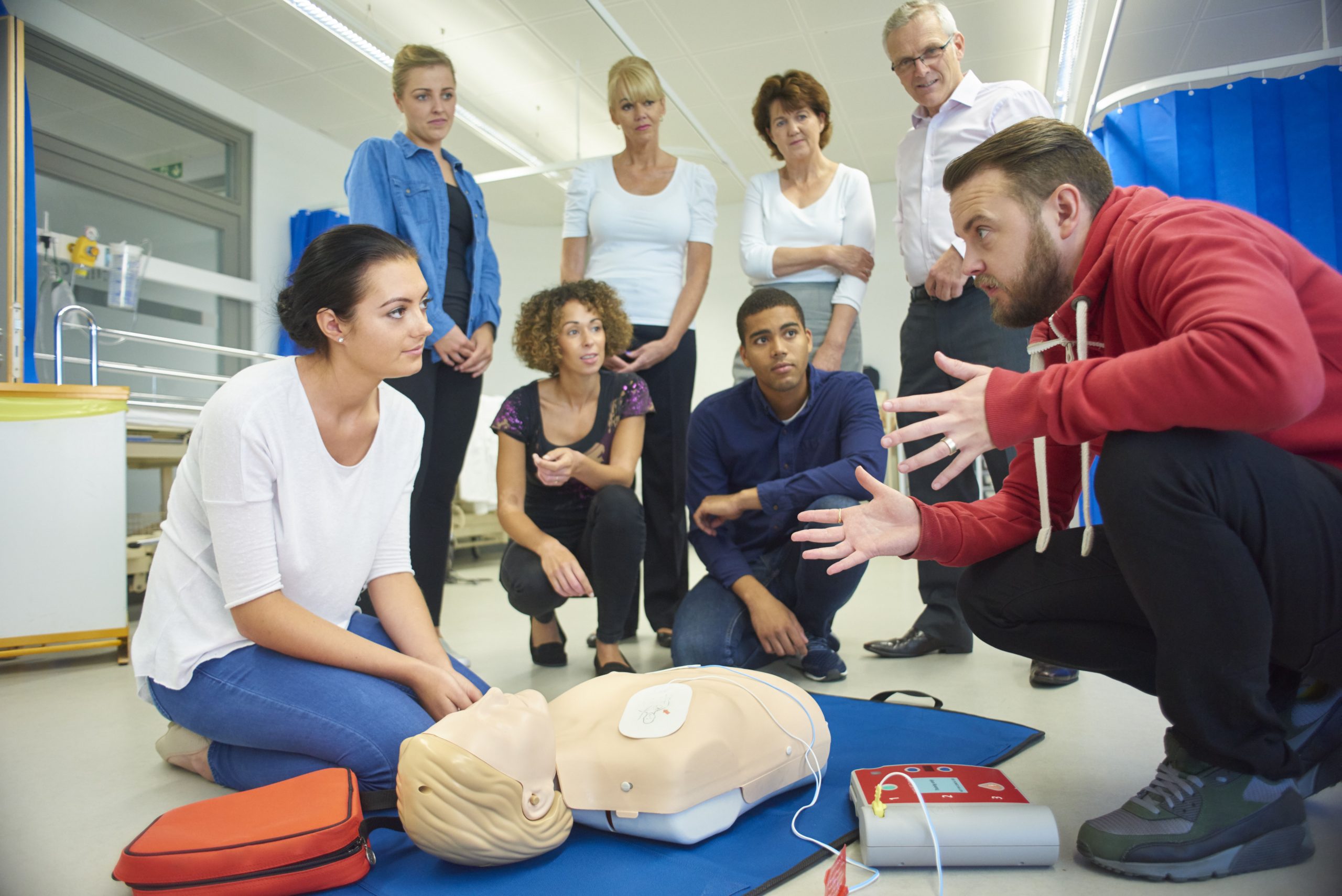

First, strong pre-course material. Individuals receive clear online components, video clips, and brief tests before the sensible session. They can complete this on a smartphone or tablet computer from home or throughout set up training time on website. This front-loads the theory: legal responsibilities, basic anatomy, DRSABCD, and recognition of common injuries.
Second, a sensible session focused practically entirely on hands-on abilities. That time is made use of for scenarios on CPR manikins, hemorrhaging control with proper pressure and bandaging, immobilisation of believed fractures, spine preventative measures, monitoring of shock, and practice with salbutamol inhalers or epinephrine auto-injectors where appropriate. Actual express cpr courses will spend a huge piece of time on compressions and ventilations, with participants cycling via different situations and responses devices.
Third, assessment incorporated right into method. Rather than created examinations controling the day, analysis is layered normally right into the useful work. The trainer observes, coaches, then formally assesses in reasonable sequences.
If a provider promises "fast first aid" however can not describe which material is blended, how theory is supplied, and for how long you actually spend doing hands-on training, you may be taking a look at an advertising and marketing tag instead of an authentic express solution.
Planning under a due date: a functional path
When you uncover you run out compliance, panic is all-natural, but it does not assist. There is a predictable sequence that security supervisors on building and construction sites can comply with to receive from "we are short on initial aiders" to "we are covered once more".
Here is a basic preparation course that functions under time pressure:
Confirm your legal and client minimums, consisting of required numbers, course kinds, and expiry dates. Audit your current first aid and cpr training condition, worker by worker, and identify gaps. Decide that needs what level of training, prioritising risky duties and insurance coverage across changes, floors and job fronts. Contact companies that use fast first aid courses and express cpr courses, asking particularly about combined choices, onsite delivery, and offered dates before your deadline. Lock in times that interrupt job least, then connect very early and plainly with supervisors so they can intend crews around the training.Handled by doing this, a limited deadline becomes a scheduling problem, not a situation. I have actually seen big websites relocate from near zero coverage to a totally certified first aid and CPR framework in under three weeks using mixed fast first aid courses and staggered fast CPR refresher sessions.
Making first aid genuine for construction workers
One of the greatest blunders I see fitness instructors make is using generic office-style situations for building and construction teams. A roof staff or concreting gang will turn off quickly if every instance seems like a paper cut at reception.
If you desire your first aid training to stick, particularly in fast or express styles, demand that courses be contextualised to building job. For example:
Run CPR circumstances that entail an employee located unresponsive at the base of a ladder, or a concreter that collapses from potential warm stroke.
Practice bleeding control using simulated injuries from grinder discs, nail weapons, or rebar cuts. Getting employees to practice solid stress under "noisy" scenarios makes a big difference.
Talk about crush injuries from plant, and just how to handle entrapment till emergency services arrive.
Discuss actual dangers on that certain site: open penetrations, formwork, precast panels, warm work, silica dust, and the effects for very first aid.
Even express first aid courses and fast cpr sessions can be abundant with real-life context if the trainer recognizes building. Employees pay even more interest, bear in mind a lot more, and are much more likely to step up in a real emergency.
I still bear in mind a scaffolder in a combined first aid and cpr training course saying "I thought CPR was for old chaps in workplaces, not for us." first aid and cpr Sunshine Coast 2 months later on, his team made use of those skills on site when a subcontractor went into heart attack. The male survived. That scaffolder is the initial to suggest for durable refresher training now.
Integrating first aid into site systems
Compliance is not only about private first aid certifications. It cpr Sunshine Coast is also about just how first aid capacity matches website systems, so that when something happens, the response is organised instead of chaotic.
Effective websites weave first aid into:
The emergency situation response plan, with clear duties for first aiders, communication methods, and access routes for emergency vehicles.
The site induction, where new employees are told that the initial aiders are, where kits are located, and what to do if they witness an incident.

Daily prestart and toolbox meetings, where managers advise teams of details threats and examine that first aid coverage is in place for planned high-risk tasks.
Incident reviews, where the quality of first aid done is evaluated in addition to the root causes of the event. This is where you identify spaces that might require targeted refresher training or additional express first aid courses.
I have dealt with websites where first aid training was utilized as a springboard to boost broader security society. When workers saw that administration purchased their ability to care for each various other, they became much more willing to speak up regarding risks, near misses out on, and tiredness. Fast first aid training can begin as a conformity exercise and end as a trust-building tool.
Managing change job, remote sites and subcontractors
Construction does not always run Monday to Friday, 7 to 3. Evening pours, weekend closures, and remote pipeline or wind farm projects add layers of complexity.
For shift work, your first aid protection should follow the job. It is insufficient to train a team of day-shift employees and hope for the best during the night. Express cpr training in short night blocks can work well here, particularly if you are attempting to reduce fatigue impact on evening crews.
Remote websites demand a higher requirement once more. On long-haul civil tasks, mine sites, or huge solar ranches, rescue action times may be long. Some jobs buy higher-level FAP first aid training or equal remote location first -responder programs, incorporated with extra considerable packages and equipment. Even here, fast first aid courses still have a function, particularly for subcontractors who get here partway through a job and need rapid upskilling to match the website standard.
Subcontractor monitoring is an additional real-world headache. As a primary specialist, you might specify that all subcontractor managers hold a present first aid and cpr course certificate. Then the subcontractor gets here with outdated or mismatched qualifications.
One reliable technique is to use express first aid courses and fast cpr correspondence course to subcontractors on or near your site. You discuss team rates with a supplier, schedule routine sessions, and after that make it an expectation that subcontractors use those sessions to fulfill your requirements. It addresses a conformity trouble and signals that you expect regular safety and security efficiency across all firms on site.
Avoiding usual blunders when time is short
When due dates impend, shortcuts lure. A few of the most damaging ones I have actually seen on building and construction projects include:
Relying only on online courses for first aid and CPR. Online-only knowing can be helpful for concept, but it does not satisfy most regulators for sensible abilities like CPR, bleeding control and secure casualty handling. Workers also shed the muscle memory that just hands-on practice can build.
Letting certificates gap "just for a number of weeks." Regrettably, cases are detached to your admin routine. If a significant injury takes place while your nominated initially aider's certification is run out, expect severe concerns in court or at an inquest, even if their practical abilities are still good.
Training the exact same little team continuously while disregarding wider coverage. On lots of sites, a couple of managers obtain sent out to every first aid course, while entire teams stay inexperienced. That looks good on paper and fails in technique when the supervisor is off website or involved in the incident.
Choosing the absolute minimum first aid courses to tick a compliance box, without regard for real risk. If you just ever buy the shortest, least expensive alternative, you might abide practically yet leave workers under-prepared for probable emergency situations like drops from elevation, crush injuries, or electrical incidents.
The antidote is state of mind. Deal with fast first aid and express cpr courses as tools to provide the best training much more effectively, not as a means to stay clear of training altogether. Blended programs, express childcare first aid courses for appropriate team, and regular fast CPR correspondence course all help maintain your criteria high while respecting time and budget realities.
What to search for in a training provider
Not all first aid and CPR service providers recognize building. When you are under time pressure and require quality outcomes, ask tough questions.
Look for instructors that can:
Describe details building circumstances and show how their fast first aid courses deal with them.
Offer adaptable scheduling and onsite distribution, not just dealt with classroom slots in an office interactive first aid training classes district.
Provide clear info concerning the structure of their express first aid courses and fast CPR options, consisting of pre-learning, in person hours, and analysis methods.
Demonstrate that their first aid and cpr course content straightens with identified standards and fulfills your regulatory authority's and clients' expectations.
Work with you on intending first aid and cpr training classes across your project timeline, instead of marketing you a one-off course and disappearing.
Some business keep a panel of favored service providers, consisting of at least one that specialises in express cpr courses and fast first aid training. That gives you choices when unanticipated requirements arise, such as onboarding a large subcontractor or replying to lessons from a significant incident.
Moving past the bare minimum
Construction is inherently high-risk. No quantity of documentation changes that. What you can alter is how quickly and efficiently individuals respond when something goes wrong.
Fast first aid and express cpr training are not shortcuts if they are run properly. They are strategies for getting the right abilities into the right-hand men in a manner that fits the truths of concrete pours, crane schedules and customer due dates. When backed by a clear understanding of legal obligations, thoughtful function mapping, and combination into day-to-day site systems, fast training becomes one more control in your risk management toolkit.
Workers observe when a company treats first aid as a genuine concern rather than an afterthought. They see who gets educated, how commonly, and whether management is willing to stop briefly manufacturing briefly so staffs can rejuvenate their CPR abilities. The following time a person on your website asks about a fast first aid course or express cpr course, deal with that as a possibility, not simply an additional job. It may be the difference that keeps a severe case from developing into a fatality.